Introducing Rivet 2.3
A native Rust rewrite of RivetKit, a reimagined dashboard, fine-grained control over actor lifecycle, and more.

Today we’re releasing Rivet 2.3: a native Rust rewrite of RivetKit, a reimagined dashboard, and fine-grained control over actor lifecycle.
RivetKit rewritten in Rust
RivetKit is the runtime that runs your actor code: it manages state, lifecycle, networking, and storage for every actor. In 2.3 it’s rewritten from JavaScript to Rust.
- Native performance: state persistence, SQLite, and networking now run in native Rust instead of on the JavaScript runtime, cutting overhead on the hot paths every actor hits
- New SQLite engine: per-actor SQLite is backed by a new native engine for faster reads and writes and higher throughput
- Background runtime: all RivetKit runtime work now runs in the background instead of on the main Node.js thread, so it doesn’t block your application logic
- Same actor API: nothing changes in your actor code, the rewrite is entirely under the hood
- A foundation for more languages: with the core logic in a language-agnostic runtime, we can build first-class SDKs beyond TypeScript instead of reimplementing the runtime per language
A whole new dashboard
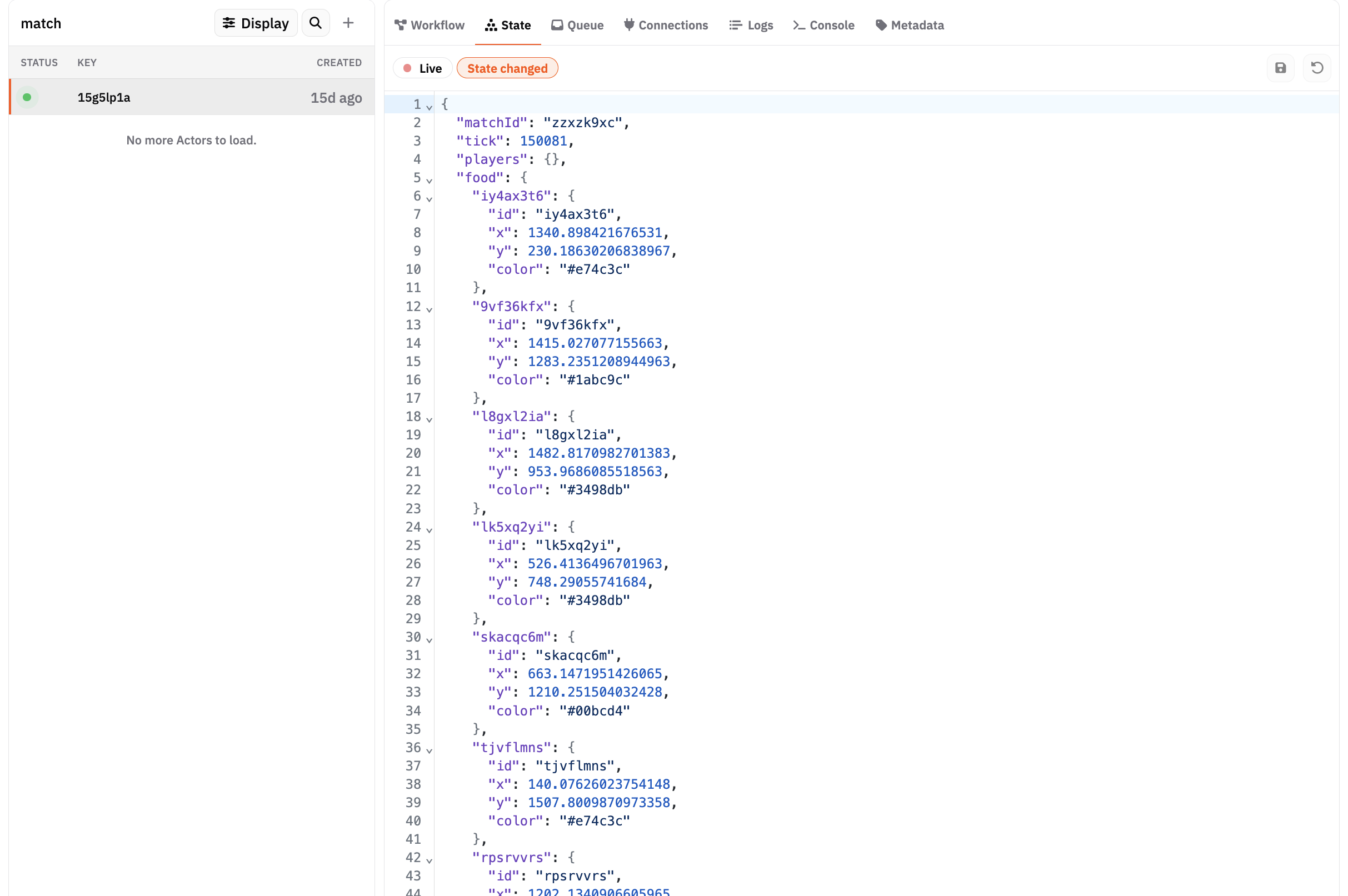
We reimagined the entire dashboard. It now ships with light and dark mode, a bigger inspector with space reserved for upcoming custom inspector tabs, and reorganized settings that make the setting you need easier to find.
Built for work that can’t be interrupted
2.3 adds fine-grained control over when an actor is allowed to sleep or move, so in-flight work runs to completion instead of being cut off.
- Finish in-flight work: an actor completes its current work before sleeping, moving, or upgrading
c.keepAwake: explicitly hold an actor awake through a long operation so it isn’t put to sleep partway through- Configurable sleep grace period: control how long an actor stays awake after its last activity, so work has time to run to completion before the actor sleeps
This matters for anything that can’t be cut off partway through: agent turns that need to finish, game servers mid-match, and expensive jobs like image or video conversion.
WebAssembly support
RivetKit now runs as either a native Node.js module or as WebAssembly, so it can support more platforms like Cloudflare Workers and Supabase Functions.
Reschedule & Sleep
Restart or sleep an actor the way you’d restart a container, from the dashboard, over the API, or from an agent. Useful for debugging how an actor behaves across its lifecycle, or forcing a fresh start after a bad state.
Rivet CLI
A new Rivet CLI:
npx @rivetkit/cli dev: run a local Rivet Engine, with presets for Cloudflare Workers and Supabase Functionsnpx @rivetkit/cli deploy: build, push, and deploy your project to Rivet Computenpx @rivetkit/cli setup-ci: scaffold a GitHub Actions workflow that deploys to Rivet Compute on every push, including preview branches
More improvements
- Prometheus metrics: RivetKit exposes runtime metrics in Prometheus format, so you can scrape and monitor your app with the tools you already run
- Faster actor connection: connecting to an actor now resolves and connects in a single round trip instead of two, cutting latency on every
getOrCreateandget - Skip ready wait:
skipReadyWaitsends a request through immediately instead of waiting for the actor to finish starting up - Actor eviction drain period: tune how quickly actors reschedule when an Envoy shuts down, trading off drain speed against disruption